

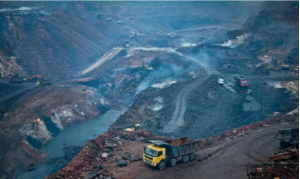
India’s plan to increase domestic coking coal production will improve raw-material security for the steel industry, but it could also create a significant methane-emission challenge if mitigation measures are not included in mine planning. Under Mission Coking Coal, India aims to raise raw coking coal production to 140 million tonnes (MT) by 2030, compared with 59.6 MT in FY2024-25.
According to IEEFA, methane emissions could increase as mining moves deeper into underground reserves. The risk is particularly concentrated in Jharkhand, where seven mines reportedly account for 81% of emissions from the 30 mines assessed. Since most methane emissions come from a few major mines, focused methane monitoring and capture at these sites could reduce emissions faster and at a lower cost.
The report estimates that around 87% of methane emissions that can be reduced could be controlled at a cost of less than $20 per tonne of CO₂ equivalent, indicating that the cost of reducing emissions should not be a major barrier.
Outlook
Domestic coking coal production is likely to rise as India seeks to reduce import dependence and support expanding steel capacity. However, deeper mining, stricter environmental standards and rising decarbonisation pressure will increase the importance of methane monitoring, drainage and utilisation technologies.
In the longer term, greater scrap-based steelmaking, EAF adoption and green-hydrogen-based DRI could gradually moderate coking coal demand, while captured coal mine methane could provide an additional energy source.